Canada Inaugurates Atlantic’s Largest Energy Storage Facilities in Nova Scotia
The Government of Canada celebrated the opening of three major battery energy storage systems in Nova Scotia on September 16, 2026. The project, funded by federal investments and a loan from the Canada Infrastructure Bank, involves partnerships with Mi'kmaw communities and aims to reduce emissions while supporting renewable energy integration.
On September 16, 2026, the Government of Canada marked the inauguration of Atlantic Canada’s largest energy storage facilities during a ceremony in Waverley, Nova Scotia. The initiative represents a significant step in the region's transition toward cleaner electricity sources.
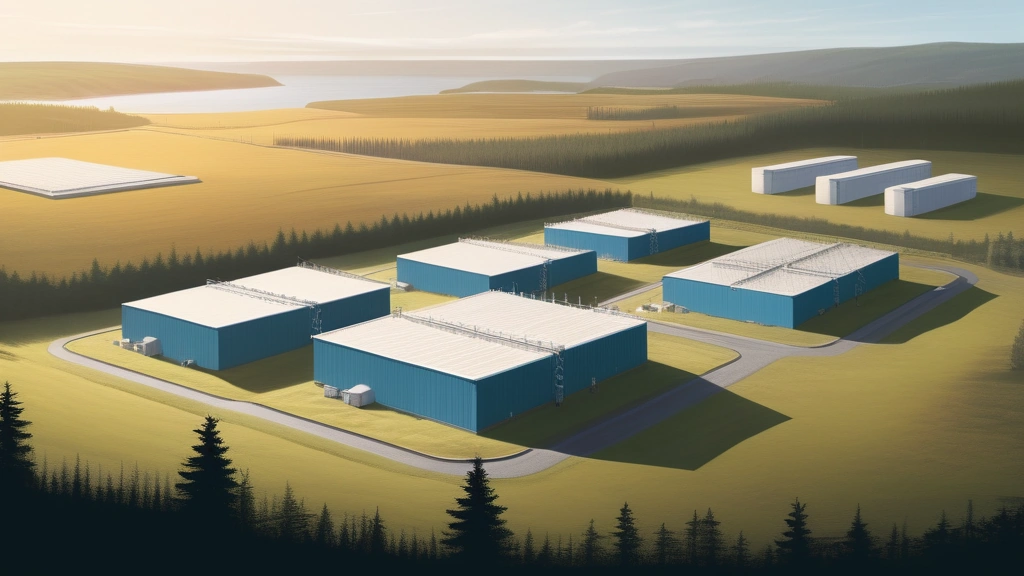
The project consists of three battery energy storage systems, each rated at 50 megawatts (MW) and 200 megawatt-hours (MWh). These facilities are located in Bridgewater, Waverley, and White Rock. According to government officials, each site has the capacity to power approximately 45,000 average residential homes for four hours during peak demand times or outages.
Funding for the infrastructure includes a $109 million investment from the Government of Canada designated for pre-development work and installation. Additionally, the Canada Infrastructure Bank provided a $138.2 million loan to support the project. This marks the first clean energy initiative backed by the Canada Infrastructure Bank’s Indigenous Equity Initiative.
A key component of the project is its partnership structure. All 13 Mi'kmaw communities in Nova Scotia are participating as equity partners through the Wskijinu'k Mtmo'taqnuow Agency (WMA). The collaboration also involves Nova Scotia Power. Officials stated that this arrangement supports economic reconciliation and creates opportunities for Indigenous communities.

The new facilities are expected to reduce greenhouse gas emissions by approximately 90,000 tonnes annually. Beyond emission reductions, the storage systems aim to strengthen grid reliability and resilience against unexpected disturbances. They also facilitate the integration of renewable energy sources, such as wind power, into the provincial grid, accelerating Nova Scotia's shift away from coal-fired electricity.