EverWind and Anthropic Plan 420-Megawatt Data Centre Campus in Nova Scotia
Green ammonia company EverWind has partnered with AI firm Anthropic to build a two-phase, 420-megawatt data centre campus at its Point Tupper site in Nova Scotia. The project would consume roughly one-third of the province's total electricity load and rely on diesel backup generation and planned wind farms, prompting critics to call for an environmental assessment.
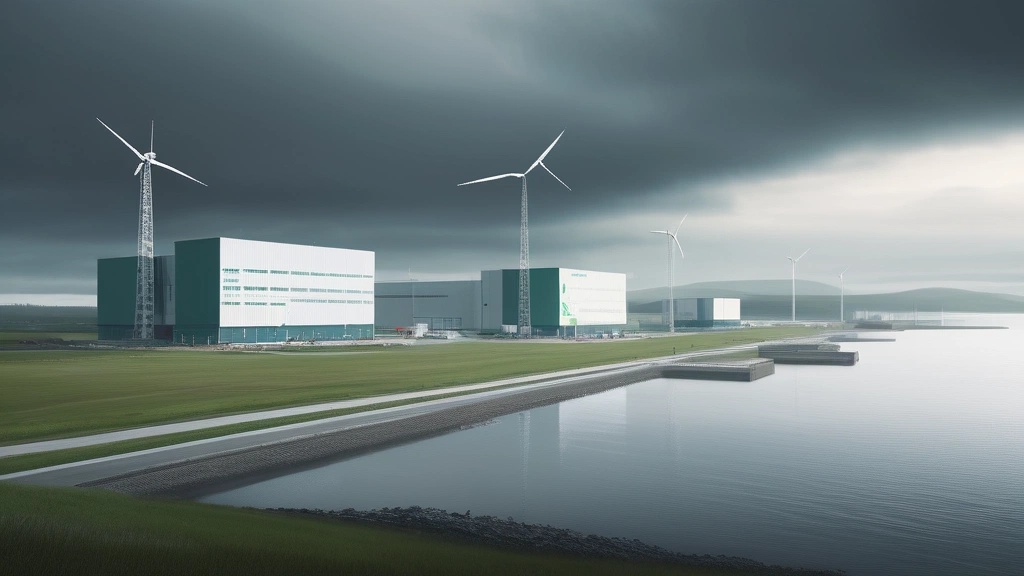
EverWind, a green ammonia company, has partnered with artificial intelligence firm Anthropic to develop a 420-megawatt data centre campus at its Point Tupper site in Nova Scotia. The project will be built in two phases and is estimated to require approximately 3.68 terawatt-hours of electricity annually, equivalent to about one-third of Nova Scotia’s total provincial electricity load of 10.7 terawatt-hours projected for 2025.
Phase 1 consists of a 95-megawatt data centre targeted to come online in late 2027. Phase 2 involves a 325-megawatt hyperscale data centre expected to begin operations in 2028. Together, the two facilities represent a significant shift in EverWind’s business focus from green hydrogen and ammonia production toward AI data centre operations.
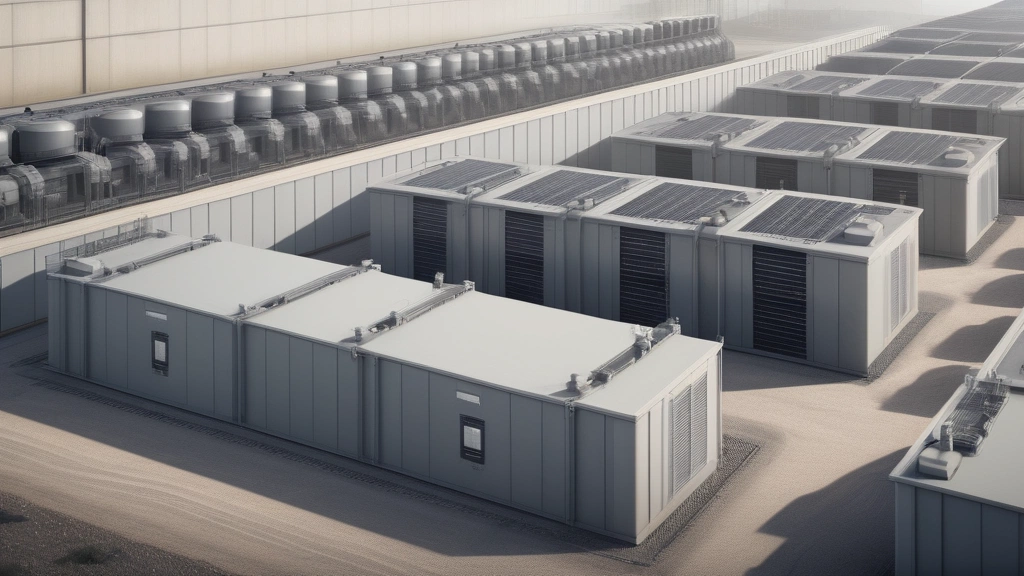
The 95-megawatt Phase 1 facility will connect to the grid under an interruptible service known as the Extra Large Industrial Active Demand Control (ELIADC) tariff. Under this arrangement, power interruptions are limited to 16 hours per day, five days per week, a maximum of 30% of hours per month, and 15% of hours per year. To manage these interruptions, EverWind plans to install 42 megawatts of diesel generation capacity alongside 200 megawatts of battery energy storage system (BESS) capacity for backup power.
In a worst-case ELIADC scenario involving 1,314 hours of annual interruption, the diesel generators would need to produce approximately 121 gigawatt-hours of electricity. Because an efficient diesel engine consumes about 250 litres of fuel per megawatt-hour, and each litre of diesel emits 2.681 kilograms of CO2e, annual diesel consumption for Phase 1 backups could range between 30.2 and 54.4 megalitres. This volume represents 4.7% to 8.5% of Nova Scotia's average annual diesel imports recorded between 2020 and 2024. Corresponding emissions from the Phase 1 diesel backups could range between 81 kilotonnes and 146 kilotonnes of CO2e annually. For context, Nova Scotia emitted 13,688 kilotonnes of CO2e in 2024.
For Phase 2, EverWind plans to invest $2 billion in four onshore wind projects—Bear Lake, Kmtnuk, Windy Ridge, and Upper Afton—to power the 325-megawatt hyperscale data centre. These four wind projects have a collective capacity of about 687 megawatts but are expected to produce 650 megawatts. If the wind sites achieve a 40% capacity factor, they will generate an estimated 2.28 terawatt-hours of electricity per year. This leaves a 0.57 terawatt-hour shortfall against the hyperscaler's required 2.85 terawatt-hours, suggesting that additional generation sources may be necessary. Natural gas from the United States could potentially be supplied to Point Tupper via the Maritimes and Northeast pipeline lateral to address such gaps.
Critics argue that the absence of an environmental assessment obscures the significant greenhouse gas emissions and fuel storage implications associated with the project's backup systems. Despite these concerns, Premier and Energy Minister Tim Houston and Environment Minister Tim Halman have shown little interest in conducting an environmental assessment of EverWind’s planned data centres.