Carney Announces Over $3.1 Billion at First First Nations-Only First Ministers' Meeting in 119 Years
Prime Minister Mark Carney convened the first Indigenous-focused first ministers' meeting in 21 years in Ottawa, pledging more than $3.1 billion for emergency preparedness and policing while committing to Indian Act reform and new revenue-sharing mechanisms. Reactions from Indigenous leaders were mixed, with some welcoming the financial commitments and others criticizing the lack of firm timelines for future meetings.
Prime Minister Mark Carney convened a historic gathering on Monday at the John G. Diefenbaker Building on Sussex Drive in Ottawa, marking the first Indigenous-focused first ministers' meeting in 21 years and the first in 119 years dedicated solely to First Nations issues. 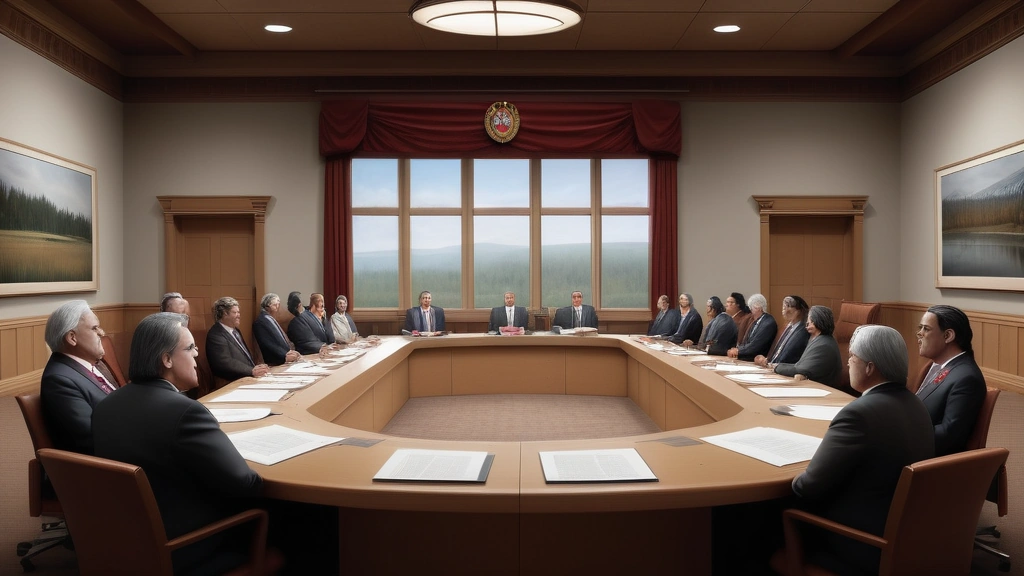
During the meeting, Carney announced more than $2.5 billion over five years for emergency preparedness in First Nations communities, alongside an additional commitment of more than $630 million over four years for First Nations and Inuit policing. The combined funding exceeds $3.1 billion.
Beyond financial pledges, Carney addressed long-standing legislative concerns, stating he shares Manitoba Premier Wab Kinew's view that the time has come to reform or abolish the Indian Act. He also said he will instruct his finance minister to work with First Nations to develop new revenue-sharing mechanisms, including the potential creation of a sovereign wealth fund.
Indigenous leaders presented a range of perspectives during the proceedings. Chief Sheldon Sunshine of Sturgeon Lake Cree Nation told attendees that history would judge them by what they change, not just by gathering. Former national chief Matthew Coon Come demanded that Canada revisit the 1930 Natural Resource Transfer Acts. Assembly of First Nations (AFN) National Chief Cindy Woodhouse Nepinak cautioned that nation-building cannot just be about ramming through major projects as fast as possible.
The event drew approximately 40 people, including three premiers, but was met with protests outside the venue questioning the legitimacy of AFN participation. Some chiefs and activists criticized the meeting as political cover for streamlining infrastructure projects, while leaders such as Abram Benedict and Woodhouse Nepinak expressed satisfaction with the tangible commitments secured. 
Disagreement also emerged regarding the frequency of future gatherings. While the AFN requested annual meetings, Carney suggested the right timeline for the next such meeting is probably two years.