Xi, Putin, and Trump Hold First-Ever Trilateral Summit in Shenzhen
Chinese President Xi Jinping hosted Russian President Vladimir Putin and U.S. President Donald Trump for a historic trilateral meeting on November 19, 2026, in Shenzhen during the APEC summit. The leaders issued a joint 'Peace Declaration' addressing nuclear arms control, UN reform, and energy stability, though analysts noted deep differences remain on issues such as Ukraine and trade.
On November 19, 2026, Chinese President Xi Jinping hosted Russian President Vladimir Putin and U.S. President Donald Trump in Shenzhen, China, for the first time in history that the leaders of China, Russia, and the United States met together in a single forum. The gathering took place on the sidelines of the Asia-Pacific Economic Cooperation (APEC) summit. 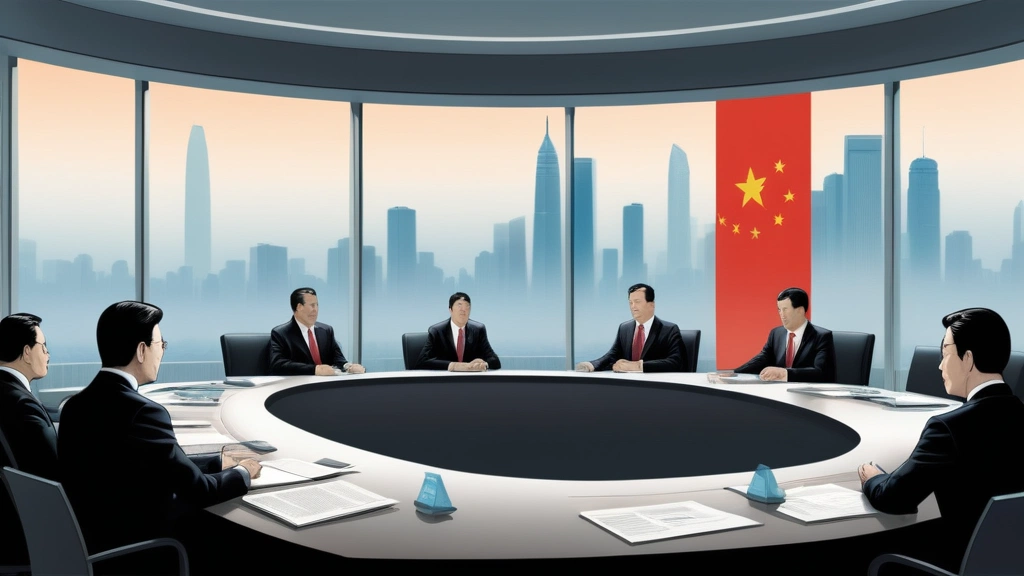
In an unprecedented gesture for a visiting leader since Xi became president, the Chinese leader greeted Trump at the airport upon his arrival. Before the talks began, Trump described the meeting as "making history" and referred to both Xi and Putin as friends.
The three leaders released a joint statement titled the "China-Russia-U.S. Leaders Peace Declaration." The declaration stated that nuclear war cannot be won and must never be fought, and pledged dialogue on reducing nuclear risk and preventing proliferation. The leaders also concurred that the International Criminal Court (ICC) and similar bodies must not abuse their jurisdiction, and called for United Nations reform.
During the discussions, Putin stated that the three countries have numerous shared interests in settling regional conflicts, explicitly mentioning the conflict in Ukraine. Xi, however, did not mention Ukraine or Iran in his remarks during the summit, focusing instead on general principles of great power harmony. The leaders also discussed the importance of stable energy flows and planned to increase the production and supply of refined petroleum products.
Reports differed on the exact duration of the meeting. CBC reported it lasted more than an hour, while The Guardian cited Chinese state media reporting roughly an hour and a half. 
Analysts suggest the trilateral meeting is unlikely to produce major binding agreements due to deep differences over Ukraine, Iran, nuclear weapons, and trade. Western sources emphasized the lack of major agreements and underlying tensions, while Chinese sources highlighted the positive, constructive, and fruitful nature of the consensus reached.
Elsewhere at the APEC summit, Japan's Prime Minister Sanae Takaichi received a more muted welcome compared to other leaders, reflecting strained relations with China.