Professional Cycling Faces Safety Crisis as UCI Mandates GPS Trackers for World Championships
With at least 11 professional cyclist deaths recorded in 2026, the Union Cycliste Internationale (UCI) is mandating GPS trackers for real-time location monitoring at the upcoming Road World Championships in Montreal. The move comes amid growing concerns that increasing speeds have outpaced safety regulations, prompting debates over technology adoption and course design.
Professional cycling is confronting a severe safety crisis, with at least 11 riders dying in races and training rides during 2026. In response to this alarming trend, the Union Cycliste Internationale (UCI) has announced that GPS trackers will be mandatory at the upcoming Road World Championships in Montreal. These devices are designed to transmit real-time data, enabling immediate rescue responses when accidents occur.
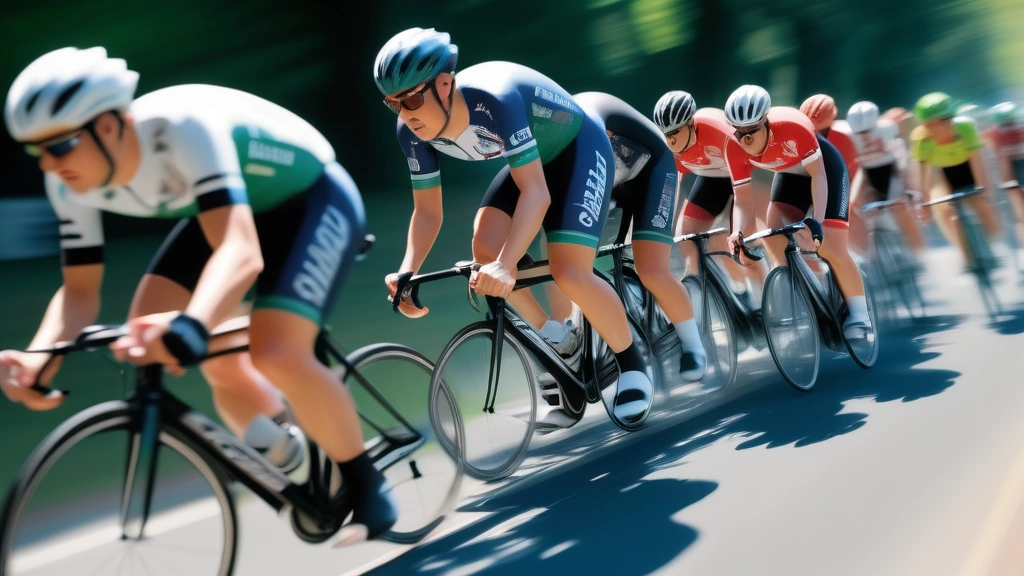
The push for enhanced safety measures stems from the sport's rapidly increasing velocities. The average speed of the 2026 Tour de France winner reached 43.3 km/h, which is 19 km/h faster than the average speed set by winners a century ago. On descents, professional cyclists now routinely reach speeds exceeding 100 km/h. This acceleration has raised questions about whether current safety protocols can adequately protect athletes.
Recent high-profile fatalities have intensified the debate. Muriel Furrer, an 18-year-old Swiss cyclist, died after being critically injured for one hour and 20 minutes during the 2024 UCI Road World Championships in Zurich. Following her death, GPS trackers were first introduced at the World Championships in Rwanda last year. More recently, 19-year-old British rider Finlay Tarling died at the Volta race in Portugal on August 14, 2026.
While wider handlebars have already been adopted by the UCI as a safety measure, other technologies remain in development or testing phases. In January 2026, the UCI issued a call for airbag technology that could be integrated into bike frames or cyclist clothing. Currently, World Tour teams Picnic PostNL and Visma-Lease a Bike are testing the Aerobag, though it has not yet received approval for use in UCI races.
The community remains divided on how best to address these risks. Some former riders and union leaders argue that slowing bikes down contradicts the spirit of professional cycling, while others advocate for mandatory safety technology following the string of deaths. Retired racer Michael Barry has called for mandatory eye tests for professional cyclists to ensure perfect eyesight given the high speeds involved.
Course design is also under scrutiny. A major pileup occurred before the final sprint in the 2026 Tour of Oman due to a bottleneck of riders approaching a roundabout. Consequently, there is a growing preference for rural areas in course planning to avoid hazardous infrastructure like bollards and roundabouts.
Canadian cyclist Michael Woods, who retired from professional cycling last year due to safety concerns, estimates he endured between 30 and 40 crashes during his career. Despite his retirement, Woods plans to race one final time at the Road World Championships in Canada, highlighting the complex relationship between risk and competition in the modern era of the sport.