Blackstone and Canadian Pension Funds to Buy 49.9% Stake in LNG Canada Unit for US$3.1 Billion
Blackstone Inc. and four major Canadian pension funds have agreed to acquire a 49.9 per cent interest in a Mitsubishi Corp. subsidiary for US$3.1 billion, securing a minority stake in the LNG Canada export facility in Kitimat, B.C. The deal supports a Phase 2 expansion that will double the terminal's capacity to 28 million tonnes per year, though environmental groups have criticized the investment.
Blackstone Inc. has partnered with four major Canadian pension funds to purchase a 49.9 per cent interest in a Mitsubishi Corp. subsidiary for US$3.1 billion. The transaction grants the investor group a minority stake in LNG Canada, the country’s first liquefied natural gas export facility located in Kitimat, British Columbia.
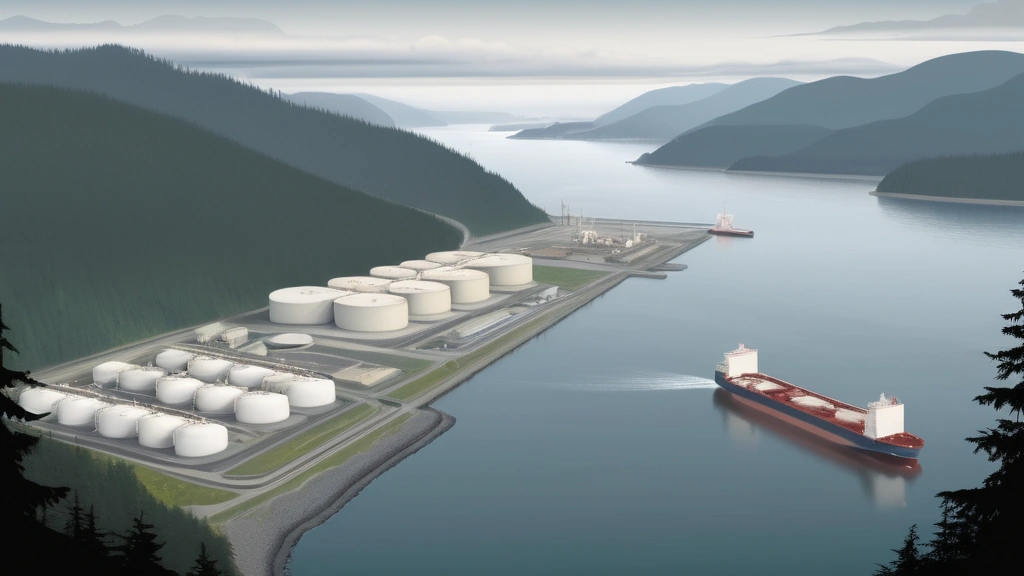
The investor group includes the Canada Pension Plan Investment Board (CPP Investments), the Ontario Municipal Employees Retirement System (OMERS), the Investment Management Corp. of Ontario (IMCO), and the Public Sector Pension Investment Board (PSP Investments). Blackstone manages US$140 billion through its infrastructure and asset-based credit platform.
Mitsubishi Corp. currently owns a 15-per-cent stake in LNG Canada and is selling half of its holding to raise money and offset expansion costs. LNG Canada is a joint venture between Shell PLC, PetroChina, Malaysia’s Petronas, Japan's Mitsubishi Corp., and South Korea's Korea Gas Corp. (KOGAS). Shell is the largest shareholder with a 40-per-cent stake and recently acquired Calgary-based ARC Resources Ltd. for US$16.4 billion. KOGAS holds a 5-per-cent stake and views the facility as a strategic energy asset to diversify away from Middle East producers.

The investment supports the Phase 2 expansion project at the Kitimat terminal, which will double LNG Canada's capacity to 28 million tonnes a year. The planned terminal expansion carries a cost of $33 billion, while the initial LNG Canada facility cost $18 billion over 13 years of construction and delays. Prime Minister Mark Carney assigned the Major Projects Office responsibility for speeding up the LNG Canada expansion on economic grounds. Duplicating equipment and suppliers is expected to shorten the construction schedule and cut costs for the expansion.
Investors view the asset as a bond substitute offering predictable double-digit returns. The deal also aligns with broader efforts to position Canada as an energy superpower and support a target of $500 billion in new investment over five years.
However, environmental groups Stand.earth and Shift Action for Pension Wealth and Planet Health criticized the pension funds' investment. They argued that the move harms climate goals, presents long-term climate risks, misallocates retirement funds, and breaks trust with members.