Google to Block K-12 Search Access Unless Schools Opt In to AI Tools
Google announced that K-12 students using its software will lose access to the company's search engine unless school administrators explicitly opt in to artificial intelligence tools. The decision has drawn sharp criticism from educators and policy-makers who argue it leverages Google's market dominance to coerce adoption of its AI products.
Students using Google software in the classroom will no longer be allowed to access the company’s search engine unless their school system opts in to artificial intelligence tools. 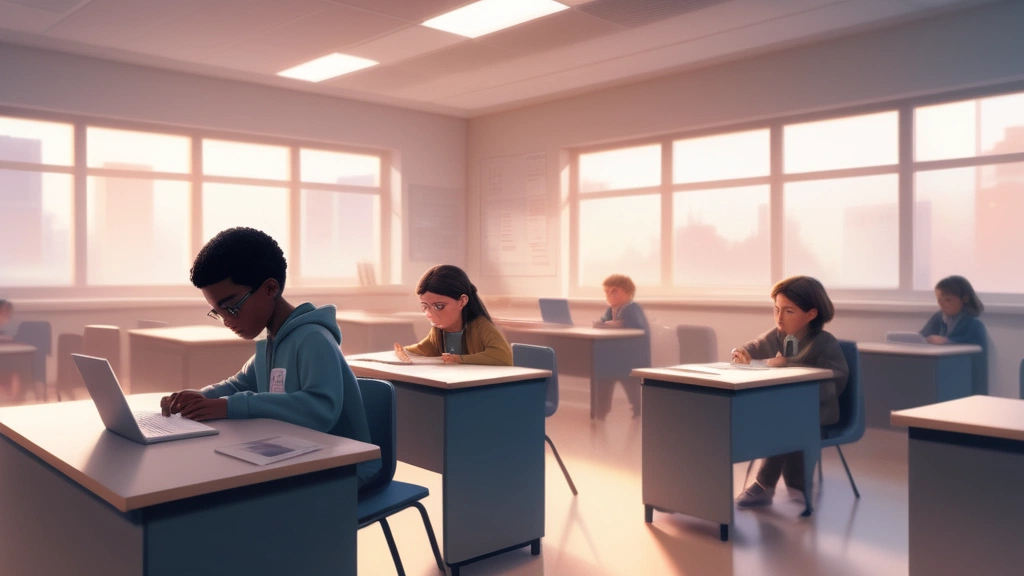
Access to Google’s AI features — including Gemini, Gemini Notebook, and Gemini in Classroom — as well as Google Search will be automatically turned off for K-12 student accounts until school administrators explicitly turn them on. Chris Phillips, Google’s vice president and general manager of education, stated that the company believes schools should have control over AI in their classrooms.
The change reverses a previous default setting where AI features were enabled for many students, aiming to give schools more control over AI usage. However, experts have raised concerns about AI's impact on children's brain development and critical thinking skills. Schools that opt out of the AI tools will consequently lose access to Google Search for their K-12 students.
The decision has drawn sharp criticism from educators and policy-makers, who argue it leverages Google's market dominance to coerce adoption of its AI products. Lina Khan, former chair of the Federal Trade Commission, criticized Google for using its search monopoly to coerce schools into adopting AI. Josh Golin, executive director of Fairplay, urged schools to turn off both Google’s AI tools and Google Search to find privacy-protective alternatives. 
The policy shift carries significant weight given the scale of Google's presence in education. The company reports that 150 million students and teachers worldwide use its Google Classroom platform.
Meanwhile, some districts are already taking independent action regarding generative AI. New York City and Los Angeles school districts have issued temporary bans on generative AI tools in elementary and middle schools while assessing safety and developing policies.