Commentary Questions Nova Scotia's $60 Billion 'Wind West' Offshore Project Amid Cheaper Alternatives
A Halifax Examiner commentary by Geoff Hurley argues that Nova Scotia's proposed Wind West offshore wind project, with a first-phase capital cost of roughly $60 billion, is not justified when compared to cheaper onshore renewables, geothermal, and potential shared nuclear energy. The piece highlights significant cost gaps, risks to the province's $2.4-billion seafood industry, and concerns about marine ecosystems.
A commentary published in the Halifax Examiner by Geoff Hurley raises significant questions about the economic and environmental viability of Nova Scotia’s proposed "Wind West" offshore wind project. Hurley argues that the initiative's massive price tag and potential ecological impacts are difficult to justify given the availability of cheaper onshore alternatives.
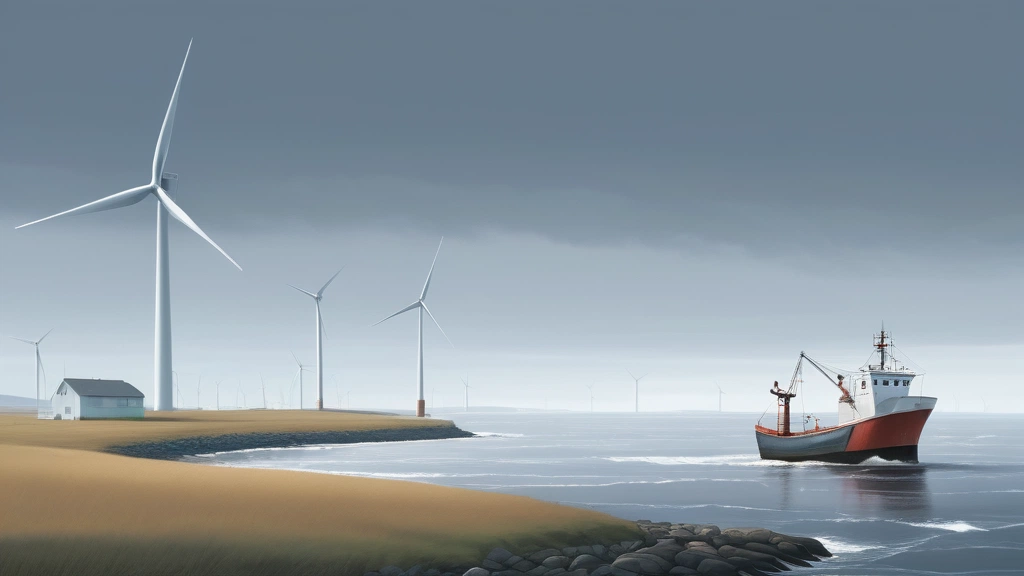
The first five-gigawatt phase of Wind West carries an estimated capital price of roughly $60 billion, split into approximately $40 billion for turbines and $20 billion for transmission infrastructure. Without federal tax credits and cheap financing, the projected generation and transmission cost stands at about $240 per megawatt-hour. Even with subsidies, that figure falls only to roughly $170 per megawatt-hour. By contrast, recent onshore wind procurements in Nova Scotia have cleared at an average of $53.17 to $63.62 per megawatt-hour.
Hurley also points to alternative energy sources already advancing in the region. Atlantic Canada’s largest grid-scale battery storage facilities are currently operating in Bridgewater, Waverley, and White Rock, providing 150 megawatts of fast-response capacity. Additionally, pilot-scale geothermal electricity generated from abandoned mine workings around Springhill and Glace Bay is modelled at roughly $100 per megawatt-hour, a cost that could fall toward $50 per megawatt-hour if scaled up.
Nuclear energy presents another potential pathway. Ontario is building four BWRX-300 small modular reactors at Darlington on Lake Ontario, with the first unit expected to connect by 2030. The first unit is budgeted at $7.7 billion, while the entire four-unit, 1,200-megawatt programme is estimated at $20.9 billion. Closer to the Maritimes, the ARC-100 reactor design proposed for Point Lepreau in New Brunswick has completed Phase 2 of the Canadian Nuclear Safety Commission’s vendor design review, with no fundamental barriers to licensing identified.
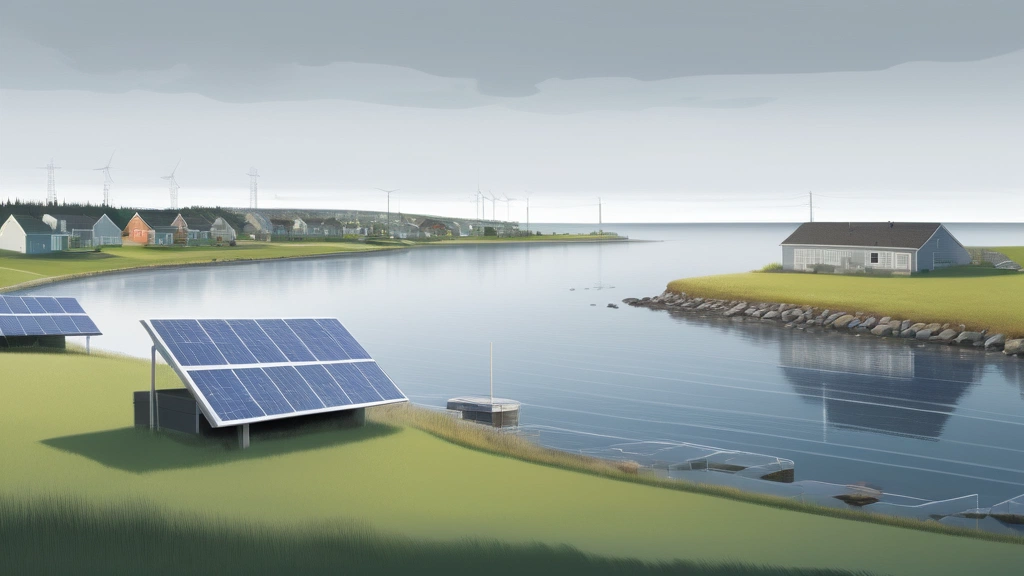
Beyond economics, the commentary highlights environmental and social risks. The Scotian Shelf supports a $2.4-billion seafood industry, and fish harvesters warn that designated wind areas overlap with established fishing grounds, potentially displacing small-boat operators. Underwater noise and electromagnetic fields associated with the project could also disrupt fish behaviour, reproduction, and migration. While surveys indicate most Nova Scotians view offshore wind positively, roughly seven in 10 express worry about the impact on marine ecosystems and whale habitat.
Proponents note that Wind West would create construction and maintenance jobs, generate royalty revenue, produce excess power for export, and help retire coal plants to clean up the grid. However, Hurley warns of financial exposure to public guarantees if anticipated export markets fail to materialize. He also critiques the project's name as misleading regarding its geographic orientation.
Nova Scotia’s Clean Power Plan aims to add nearly 2,000 megawatts of wind, solar, and battery storage by 2030. According to the commentary, the province's unnamed deputy energy minister has stated that Nova Scotia can achieve its 80 percent renewable energy target without relying on Wind West. The provincial government has allocated $5 million for FLiDAR buoys and $3 million for transmission modelling related to the offshore wind initiative.