Halifax Marks National Truth and Reconciliation Day Amid Political Tensions
Halifax observes the sixth annual National Truth and Reconciliation Day on September 30, 2026, launching Mi'kmaw History Month with a focus on healing. The day features service adjustments and moments of silence, occurring against a backdrop of recent political friction between Indigenous leaders and the provincial government over cannabis enforcement rhetoric.
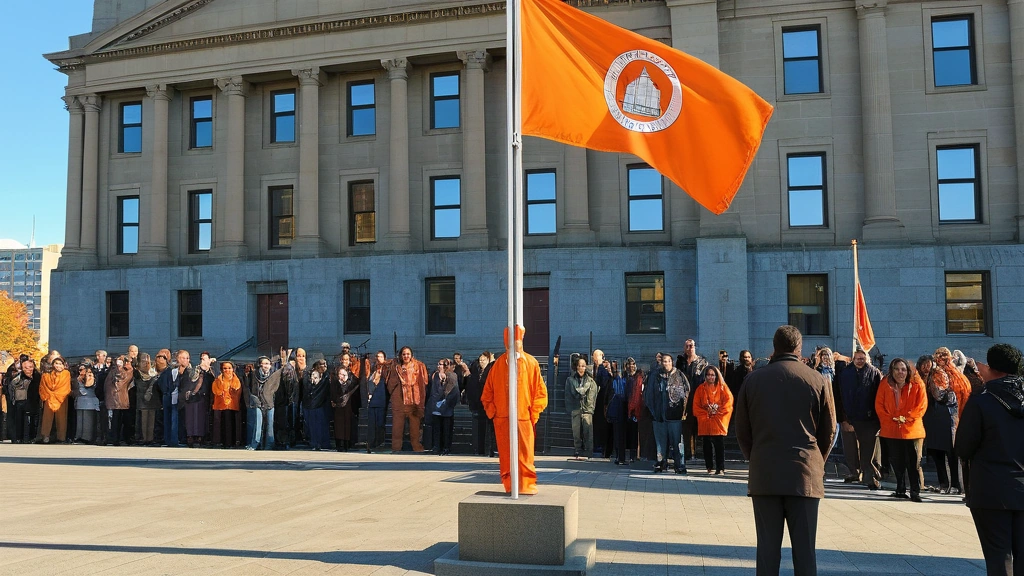
On Wednesday, September 30, 2026, Halifax will observe National Truth and Reconciliation Day for the sixth time in the Halifax Regional Municipality and province. The observance marks the beginning of Mi'kmaw History Month, which carries the theme "Nepisulti’k – We Are Healing," inspired by the teachings of late Elder Murdena Marshall.
To honor residential school survivors and victims, a flag-raising ceremony is scheduled at Halifax City Hall on Tuesday, September 29, 2026. On the day itself, all Halifax Transit buses will pull over for a moment of silence at 2:15 p.m. This pause commemorates the 215 unmarked graves found at a residential school site in Kamloops, B.C.
Service adjustments will be in place across the city. Halifax Transit buses and ferries will operate on a holiday schedule, with no Woodside Ferry service available. Municipal recreational facilities and customer care centres will be closed, as will NSLC (Nova Scotia Liquor Corporation) locations. However, waste collection will continue, and grocery stores are expected to remain open.
Minister of L’nu Affairs Leah Martin encouraged residents to support Indigenous communities by attending events, supporting businesses, artists, and authors, or visiting cultural centers such as the Millbrook Cultural and Heritage Centre, Membertou Heritage Park, or Nora Bernard Commemoration Park.
This year’s observance follows a period of heightened political tension between Indigenous communities and the Government of Nova Scotia during spring and summer 2026. The friction arose from proposed crackdowns on illegal cannabis production in Indigenous communities. Premier Tim Houston, Minister Leah Martin, and Scott Armstrong made comments linking illegal cannabis sales in these communities to other illicit activities, including gun sales, drug trafficking, and human trafficking.
First Nations leaders criticized this rhetoric, arguing it villainized Indigenous peoples and undermined treaty rights using outdated colonial tactics. Police raids targeting dispensaries in First Nations communities prompted opposition, including two temporary blockades of Nova Scotia highways ahead of the Easter long weekend.
A Nova Scotia RCMP spokesperson stated that investigators discovered cocaine and psilocybin mushrooms during searches of illegal cannabis storefronts. While eighteen firearms were seized in the Southwest Nova district, the spokesperson noted there was no evidence to support charges related to firearms trafficking. Furthermore, the RCMP said they were not aware of any evidence showing a direct connection between human trafficking and illegal cannabis markets, though both crimes can coexist.