CBC Investigation Reveals Network Grooming Boys as Young as 12 for Cross-Country Drug Trafficking
A CBC fifth estate investigation has uncovered a network in which young Black boys, some as young as 12, are recruited and coerced into transporting drugs across Canada. The report details how traffickers use minors as disposable couriers to shield adult gang members from arrest, highlighting the case of 15-year-old Jay'siiah Webb-Long, whose remains were found in Saskatchewan after he disappeared from Ontario.
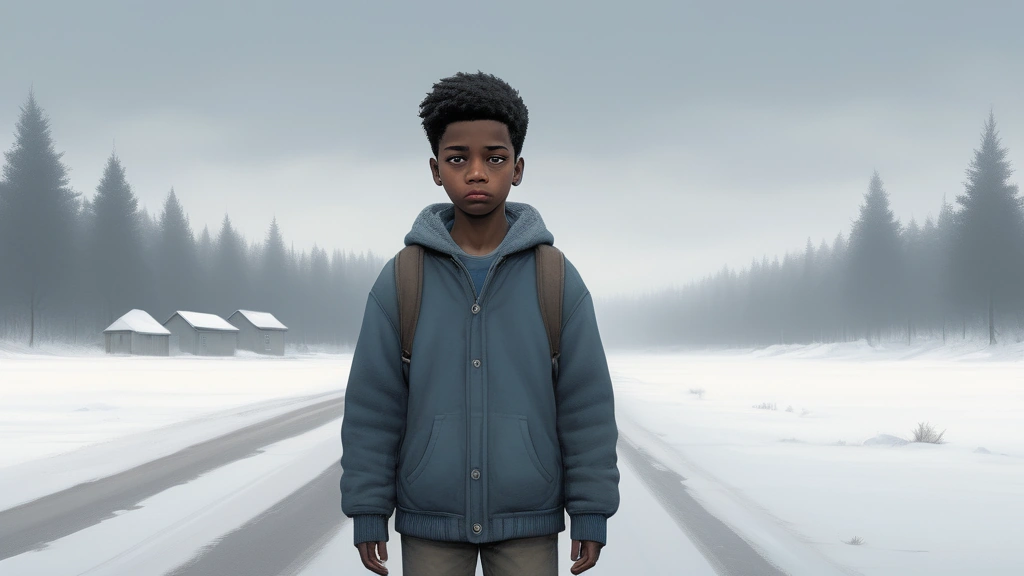
A CBC fifth estate investigation has revealed a network in which young Black boys, some as young as 12, are groomed and coerced into drug trafficking operations spanning Canada. Recruiters in their 20s and 30s present themselves as trustworthy figures, luring youth with offers of money and protection before sending them to remote communities to sell narcotics.
According to the investigation, a boy identified as Kai began selling drugs at age 12 after being recruited by older men. Another victim, Jamal, now 18, started "going OT" — out of town — at age 12. He was dispatched to communities in Saskatchewan, Manitoba, and Ontario, with his farthest trip reaching Yellowknife. The fifth estate found that boys are sent as far west as British Columbia, north to Yellowknife, and east to Halifax, where drugs are sold at prices up to 10 times higher than in urban centers. In First Nations communities, an oxycodone pill can sell for $200.
To move underage boys without detection, traffickers provide fake names and identification, allowing them to board planes and drive to remote locations. Winnipeg Police Inspector Josh Ewatski stated that gangs use young boys as disposable mules and legal shields to avoid exposing themselves to violence or arrest. Youth who fail to meet drug quotas face violence, kidnapping, and death threats, trapping them in cycles of debt and coercion that make exiting gang life difficult.
The drugs involved are linked to international cartels. In May 2026, Winnipeg police seized 525 kilograms of cocaine, methamphetamine, and fentanyl, arresting individuals associated with the Hells Angels, Wolfpack Alliance, and a Mexican cartel. This influx contributes to increased drug availability and violence in remote Indigenous communities.

The investigation highlights the case of 15-year-old Jay'siiah Webb-Long, who disappeared from Brampton, Ontario, on March 27, 2025. Human remains confirmed to be his were found near Pelican Narrows, Saskatchewan, on May 13, 2025 — roughly 3,000 kilometres from his home. The Saskatchewan RCMP took over the file as a homicide investigation in July 2025 but did not alert the public until September 2025, an eight-week delay. Families in these situations experience trauma and frustration due to delayed police responses, lack of communication, distrust, and fear that missing children will simply be labeled runaways.
Data underscores the disproportionate impact on Black youth. Statistics Canada data shows Black boys accounted for almost half of the 322 male youth reported missing to Toronto police in 2024, despite representing less than 10 per cent of that age group's population in the city. Additionally, a 2026 federal Justice Department report found that the proportion of Black youth in correctional supervision remained at 12 to 13 per cent in Nova Scotia, Ontario, Alberta, and British Columbia from 2019 to 2024.