Israel to Open Bids for E1 Settlement Expansion Ahead of Elections, Rights Groups Report
The Israeli government is set to open bidding for thousands of housing units in the controversial E1 area, a move rights groups say would bisect the West Bank. This announcement coincides with a new report from B'Tselem accusing the government of accelerating policies that threaten Palestinian existence.
The Israeli government is proceeding with plans to expand settlements in the E1 area east of Jerusalem, according to the Israeli human rights organization Ir Amim. The group stated on Wednesday that bids will open on October 25 for an additional 2,167 housing units. This new tender follows a previous announcement made at the end of August for 1,234 units, bringing the total number of planned housing units in the project to 3,401.
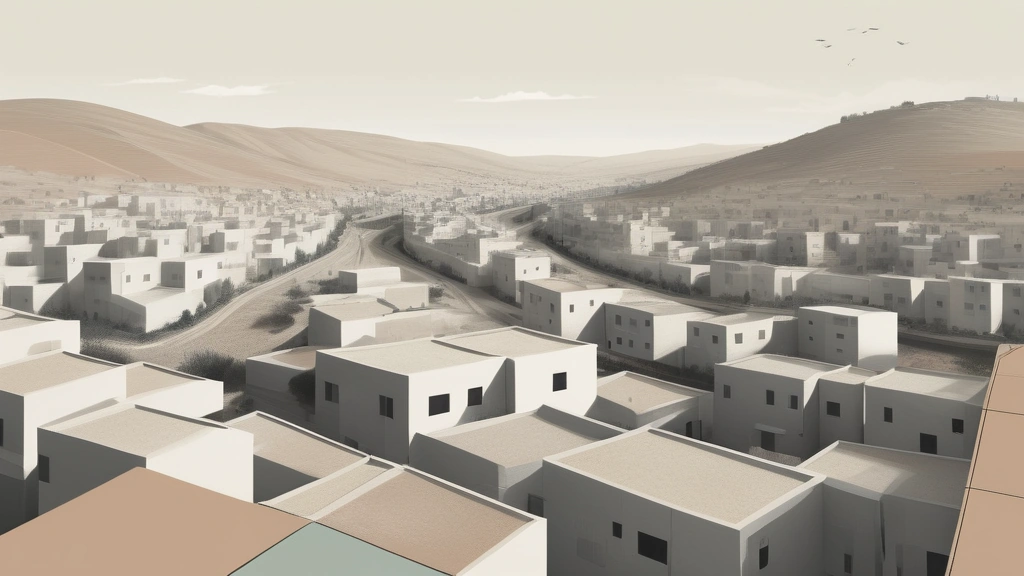
The timing of the bid opening is significant, as it occurs just two days before Israel holds a parliamentary election. The E1 settlement project has long been a point of international contention because its construction would effectively cut the West Bank in two and separate it from East Jerusalem. Critics argue this expansion threatens the viability of a future Palestinian state.
Palestinian President Mahmoud Abbas’s spokesperson condemned the new settlement units, describing them as a violation of international law. Conversely, Israeli Finance Minister Bezalel Smotrich stated that the settlement plan would "bury" a Palestinian state. Prime Minister Benjamin Netanyahu's office did not respond to requests for comment regarding the tenders.
In a parallel development, another Israeli human rights organization, B'Tselem, released a report on Monday accusing the Netanyahu government of rapidly dismantling the foundations of Palestinian existence through what it termed a "comprehensive mechanism of elimination." The report identified five areas of this mechanism: violence and intimidation, movement restrictions, economic strangulation, social and political disruption, and territorial takeover. B'Tselem argues these policies are creating an irreversible reality on the ground ahead of the elections.

Data from the United Nations indicates that settler violence has reached record levels. More than 1,260 settler attacks causing casualties or property damage were recorded in the first half of 2026, averaging six incidents per day. By late July 2026, the UN Office for the Coordination of Humanitarian Affairs reported that 18 Palestinians had been killed in settler-related incidents. Approximately 700,000 Israelis currently live in the occupied West Bank and East Jerusalem.
International criticism of the settlement expansion has intensified. Recently, Canada, Britain, and France banned exports of goods from Israeli settlements in the occupied West Bank. While Israel rejects the characterization of the West Bank as "occupied," calling the area "disputed," the UN and most countries deem the settlements illegal under the Fourth Geneva Convention. Israeli authorities have claimed that violent settlers are a small extremist minority acting outside policy, a stance disputed by B'Tselem, which argues settler militias function as an operational arm of state-backed territorial control.