Morien Resources Files Initial Project Description for Lazy Head Marine Terminal in Nova Scotia
Morien Resources Corp. has submitted the Initial Project Description for the Lazy Head Marine Terminal to Canada's Impact Assessment Agency, launching federal regulatory review for a proposed granite aggregate project designed to produce up to 3.4 million tonnes annually over an 85-year lifespan.
Morien Resources Corp. announced that the Initial Project Description (IPD) for the Lazy Head Marine Terminal has been submitted to the Impact Assessment Agency of Canada (IAAC). The filing initiates the formal federal regulatory review process for the terminal, which is a component of the broader Lazy Head Aggregate Project. A provincial Environmental Assessment Registration Document is expected to be filed shortly.
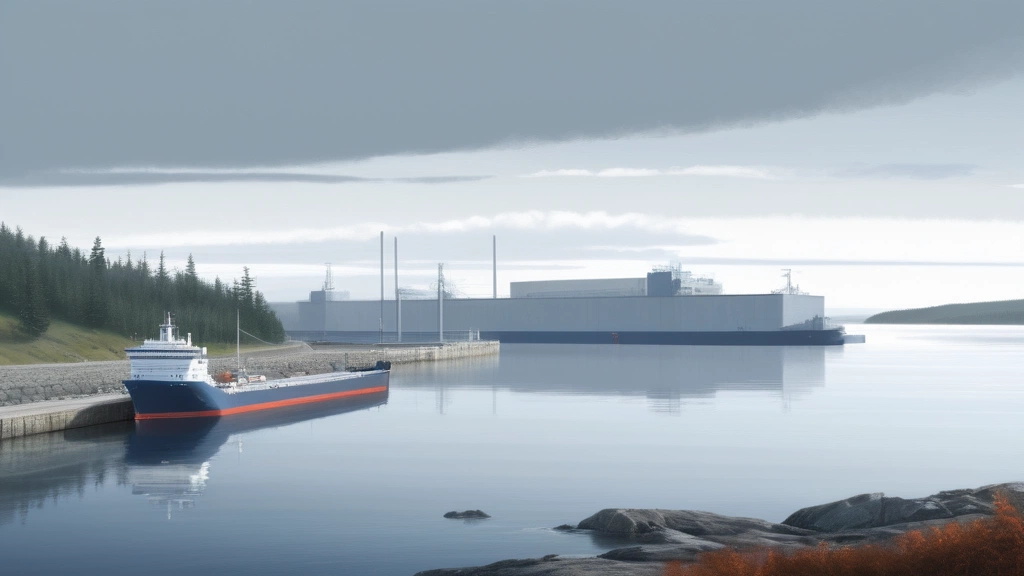
Carver Mineral Resources, Inc. is the proponent of the Lazy Head Aggregate Project. Morien originated the project and acts as its agent for planning, engagement, and permitting. The project is located on Chedabucto Bay in the Municipality of the District of Guysborough, approximately 5.5 kilometres west of Canso, Nova Scotia.
The proposed development comprises an open pit quarry, a processing plant, and a marine terminal. The quarry is designed to produce up to 3.4 million tonnes per year from a granite resource, supporting an operating life of approximately 85 years. The marine terminal is intended to load bulk carriers of up to 48,000 deadweight tonnes. To reduce the project's marine footprint and its effect on local fisheries, the terminal design was shortened from 420 metres to 270 metres offshore, which also reduced the design vessel class from 60,000 to 48,000 deadweight tonnes.

Carver estimates initial capital expenditures of approximately $284 million over an 18- to 24-month construction period. Total project expenditures are estimated at approximately $3.2 billion over the life of the quarry, including roughly $34 million per year in operating expenditures and sustaining capital at full production. A third-party economic benefits assessment estimates the project will contribute $2.3 billion to Nova Scotia’s gross domestic product over its lifespan, provide direct employment for approximately 75 people, and deliver $1.2 billion in benefits to the Guysborough region, averaging $13 million annually.
Under a Community Benefits Agreement, two funds will be established: the Community Development Fund, providing approximately $340,000 annually at full production, and the Community Wellness Fund, providing approximately $170,000 annually. Together, these total approximately $510,000 in annual community support.
Engagement efforts have included agreements with Indigenous and local stakeholders. In June 2026, Carver and Morien executed a Memorandum of Understanding with the Assembly of Nova Scotia Mi’kmaw Chiefs to establish a framework for negotiating a Mutual Benefits Agreement. The following month, in July 2026, a Community Liaison Committee was established with representatives from the community, the Municipality of the District of Guysborough, Morien, and Carver.