New Battery Storage Facility in Kings County Joins Nova Scotia Grid
A new 50-megawatt battery storage facility in White Rock, Kings County, has begun operations, completing a trio of projects designed to enhance grid reliability and support renewable energy integration across Nova Scotia.
Three grid-scale battery storage facilities have been built in Nova Scotia and are now operational. Each facility has a capacity of 50 megawatts and 200 megawatt-hours, providing four hours of storage. The newest site, located in White Rock in Kings County, began operating on September 3 after undergoing performance testing and commissioning in August. It was the last of the three facilities to come online.
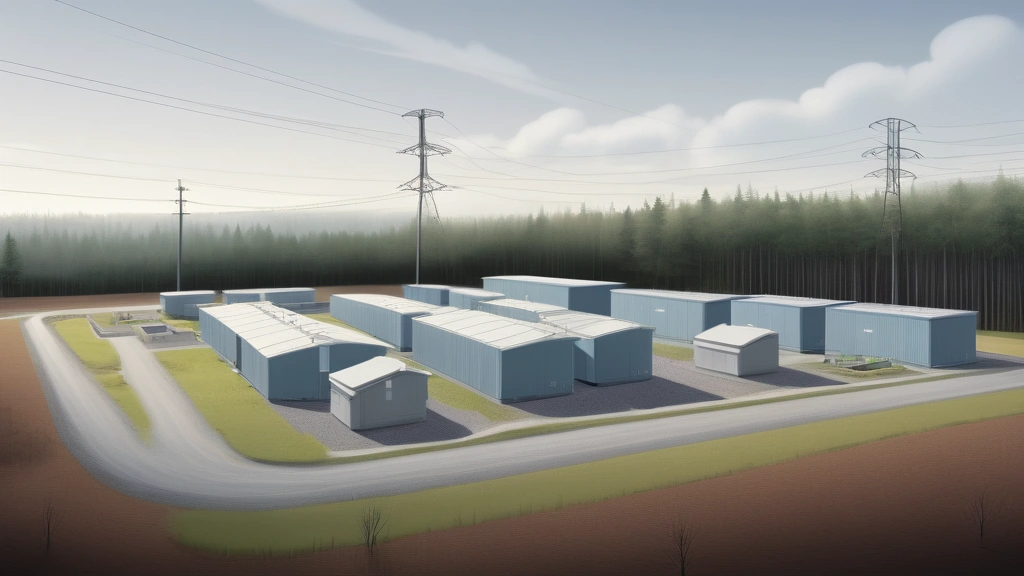
The other two battery storage sites are located in Bridgewater and Waverley. These first two sites came into service at the end of December and were used immediately during an all-time high peak load experienced in February. The White Rock facility is situated near the Canaan Road substation and transmission lines, with a new smaller substation built beside it for grid interconnection.
These projects are designed to maximize renewable energy resources, increase grid capacity and reliability, and support the transition from coal-fired electricity to renewable energy. They are expected to reduce greenhouse gas emissions by about 90,000 tonnes annually. The facilities are designed for a 20-year life span, with asset management practices in place to monitor health and explore options to extend life or augment capacity.

The project received significant financial backing, including $109 million in federal investment through Natural Resources Canada’s Electricity Predevelopment and Smart Renewables and Electrification Pathways programs. Additionally, the Canada Infrastructure Bank provided a $138.2 million loan, split between $120.2 million for Nova Scotia Power and $18 million for the Wskijinu’k Mtmo’taqnuow Agency (WMA).
All 13 Mi’kmaw communities in Nova Scotia are participating as equity partners through the WMA, providing economic reconciliation pathways for Indigenous communities. For safety, 60,000 gallons of water will be available at each location to cool areas around battery containers in the event of a fire.