EverWind Fuels Announces $10 Billion AI Data Centre and Wind Energy Project in Nova Scotia
EverWind Fuels has unveiled plans for a more than $10 billion private investment to build a 420-megawatt AI data centre campus and 650 megawatts of onshore wind energy projects at Point Tupper, Nova Scotia. The development includes Indigenous equity partnerships, a 20-year lease with an unnamed frontier AI developer, and commitments to fund grid upgrades and limit water usage.
EverWind Fuels has announced plans for more than $10 billion in private investment to develop an artificial intelligence data centre campus and a renewable energy portfolio in Nova Scotia. Described as the largest private investment in the province's history, the project will be built at the Point Tupper industrial site in Cape Breton, just outside Port Hawkesbury. 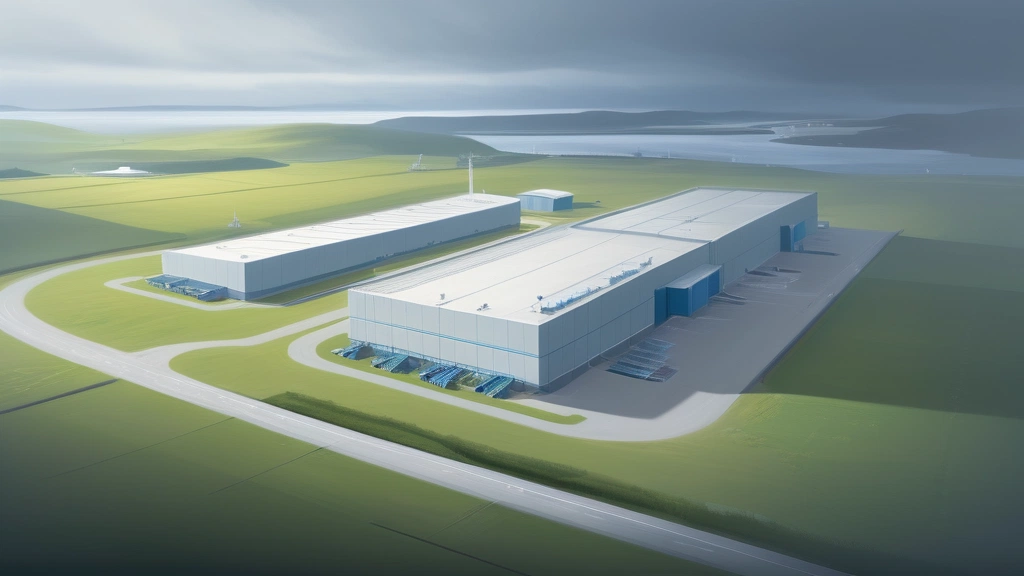
The investment includes over $8 billion allocated for the data centre campus and $2 billion for onshore wind energy projects. The data centre is planned in two phases: Phase 1 will deliver 95 megawatts of capacity by late 2027, while Phase 2 will add 325 megawatts, bringing the total campus capacity to 420 megawatts with completion targeted for 2028. An unnamed leading frontier AI developer has signed a long-term lease agreement for the initial phase spanning at least 20 years.
To power the facility, the wind component consists of four projects—Bear Lake, Windy Ridge, Kmtnuk, and Upper Afton—that will add 650 megawatts of generation capacity. The development also includes a 200-megawatt battery storage bank to support the facility and manage grid demand. EverWind CEO Trent Vichie stated that the company will fund all connection, network upgrade, and other electricity-system costs attributable to the development to prevent rate increases for existing customers.
The data centre will use a closed-loop water-glycol cooling system drawing water from Landrie Lake. Water usage is estimated at 100,000 litres per day during Phase 1 and 500,000 litres per day at full operation, representing approximately one percent of Landrie Lake's daily safe withdrawal volume of 34 million litres. EverWind has also signed on to the Government of Canada’s Responsible Data Centre Development Principles.
A consortium of Mi’kmaw communities, fronted by Membertou First Nation, is negotiating a nine percent equity stake in the data centre project. The same Mi'kmaq consortium holds a 51 percent ownership stake in the four wind projects. 
The project is expected to create approximately 2,000 construction jobs and 215 permanent operating positions. Projections indicate the full development could generate approximately $2 billion in provincial GDP during construction and $137 million annually at full operation, alongside $1.5 billion in projected corporate income tax over 20 years and $400 million in projected municipal tax revenues.
Nova Scotia Premier Tim Houston and federal officials attended the announcement, citing job creation and digital sovereignty as key benefits. However, the proposal has drawn criticism. The Halifax Examiner has questioned the credibility of the $10 billion investment figure, raised concerns about environmental impacts and potential strain on the provincial grid if wind projects are delayed, and criticized a perceived lack of transparency given previous government statements regarding data centre regulatory frameworks.