Canadian Universities Turn to Private Partnerships to Tackle Student Housing Shortages
Facing financial constraints and a severe shortage of student residences, universities in Ontario and across Canada are increasingly relying on private-public development partnerships. Institutions such as the University of Toronto, Ontario Tech, and Toronto Metropolitan University are leveraging private capital to build new housing faster and at lower upfront costs, though critics warn of long-term affordability risks.
Canadian universities, particularly in Ontario, are accelerating the adoption of private-public development partnerships to address persistent student housing shortages and tight institutional budgets. By leveraging private capital, institutions aim to reduce upfront costs and shorten construction timelines compared to traditional university-funded models.
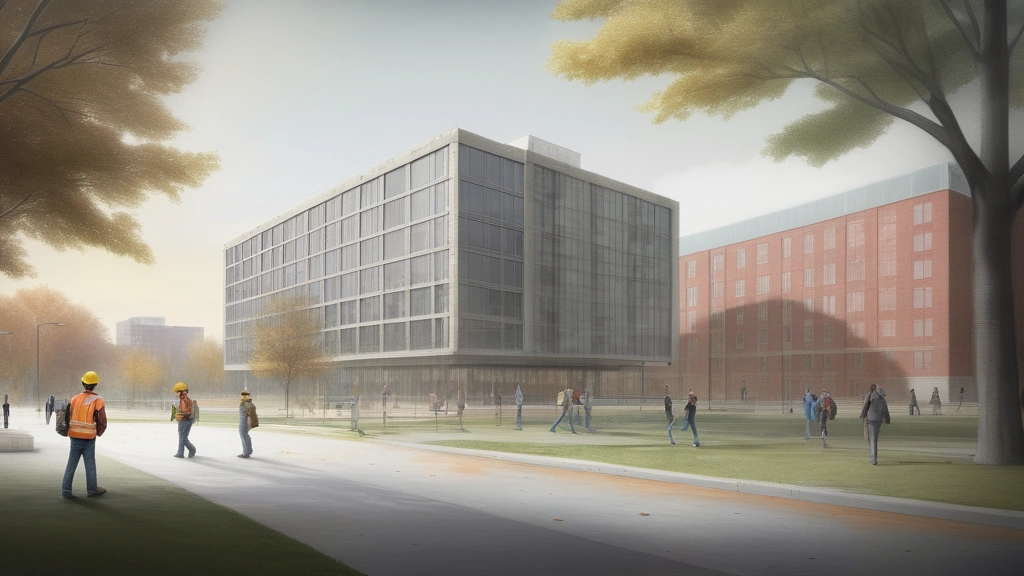
The University of Toronto plans to build up to 5,500 new student residence spaces by 2036. Under a traditional model, the cost is estimated at roughly $300,000 per bed. The first two projects under U of T’s Build More Housing Initiative involve a joint venture with Tricon Living to add more than 1,200 beds on the St. George campus. A February report by HOUSE Toronto estimates that U of T currently provides about 12,100 beds for over 64,000 students at the St. George campus, representing less than one-fifth of enrolment capacity.
Ontario Tech has taken a different approach, leasing land for 99 years to a private group led by Campus Suites and Woodbourne to build The Ridge, a 450-bed residence, without putting any capital into its construction. Ontario Tech Vice-President Brad MacIsaac stated that the private proposal for The Ridge was roughly 20 percent less expensive than building it themselves and could open about two years sooner.
Toronto Metropolitan University (TMU) is developing the Bond Street residence, which will feature more than 1,370 beds, in partnership with Cedar Podium. The project is backed by $83 million in debt financing from the Building Ontario Fund.
These partnerships allow universities to preserve capital for academic priorities such as teaching and research. The financial pressure is especially acute in Ontario, where public funding per student is the lowest in Canada. According to Higher Education Strategy Associates’ 2026 report, about two-thirds of Ontario universities' income comes from non-government sources.
Private investment in the sector is expanding nationally. Harrison Street Asset Management has assembled a Canadian student-housing portfolio of about 4,500 beds across four provinces, targeting nine university markets. In Burnaby, B.C., Koto, a privately-owned student residence on Simon Fraser University (SFU) land, opened in the second quarter of this year with rents starting at approximately $1,250 a month.

The shift toward private partnerships follows a post-2023 foreign student enrolment boom that strained local housing markets in communities like Kitchener and North Bay. Subsequent federal restrictions on international students have disrupted enrolment assumptions, making demand forecasting and investment selectivity more complex.
While private arrangements can accelerate construction, they introduce risks regarding long-term costs, rent affordability, and asset ownership. Critics argue that government low-cost financing would be preferable to profit-driven private deals, warning that such partnerships may increase financial burdens on students through higher rents or long-term costs.