Short-Notice Public Session on EverWind's $8-Billion AI Data Centre Raises Water and Grid Concerns in Nova Scotia
The first of three public information sessions on EverWind Fuel's proposed $8-billion AI data centre in Point Tupper, N.S., was announced less than 10 hours before it began. Provincial officials and company representatives addressed concerns about water usage, electrical grid strain, and job creation, while critics questioned the lack of a formal environmental assessment and the transparency of the session format.
The first of three planned public information sessions regarding EverWind Fuel’s proposed $8-billion artificial intelligence data centre in Point Tupper, Nova Scotia, took place on a Tuesday evening after being announced less than 10 hours before it began. The short notice drew criticism from attendees who said the format lacked transparency and left many questions unanswered, while provincial officials described the gathering as an opportunity to provide clear, factual answers.
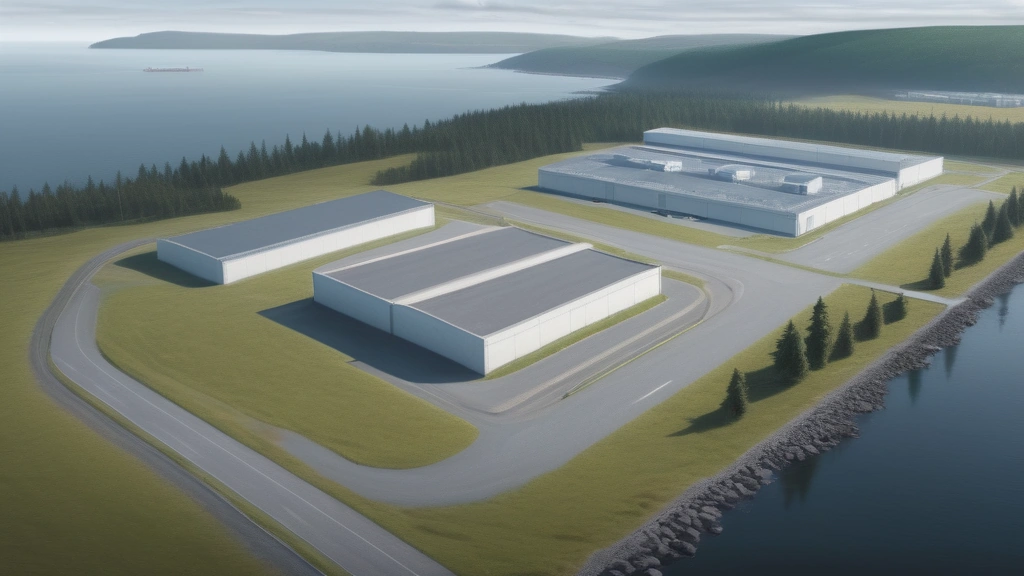
During the session, provincial representatives and EverWind officials addressed community concerns surrounding water usage, potential strain on the electrical grid, and projected employment. Richmond County Warden Lois Landry stated that Port Hawkesbury’s water utility customers would be prioritized over industrial users, including EverWind, during drought scenarios. Addressing the facility's cooling needs, EverWind’s chief financial and strategy officer Matthew Tinari explained that the project plans to use a closed-loop cooling system filled with a water-glycol mixture. According to Tinari, additional water would only be required when temperatures exceed 27 degrees Celsius. The project is estimated to use an average of 100,000 litres of water daily for phase one, with total daily water usage for both phases projected at 500,000 litres.
Concerns about the electrical grid were also raised, particularly regarding potential strain during peak winter demand. Stephen MacDonald, deputy minister of Nova Scotia’s Department of Energy, confirmed that EverWind has agreed to bear all incremental costs associated with connecting to the electricity grid. Officials noted that the company will participate in interrupter clauses during periods of peak demand to mitigate grid strain. Phase one of the data centre is expected to have a capacity of 95 megawatts. However, sources reported conflicting figures for the proposed total capacity of onsite diesel generators, with numbers cited as both 42 MW and 102 MW.

On the economic front, Tinari estimated the project would create more than 2,000 construction jobs across the data centre and wind projects. He added that phase one of the data centre is expected to add approximately 115 workers to the 100 employees currently working at EverWind’s Point Tupper facility, while wind projects are expected to generate 100 full-time positions. Projected economic impacts include $2.4 billion in construction spending within Nova Scotia, an estimated $2 billion contribution to provincial GDP during the construction phase, $1.5 billion in provincial corporate taxes, and $100 million in property taxes for Richmond County.
Lora MacEachern, deputy minister with the Department of Environment and Climate Change, addressed questions about regulatory oversight, explaining that the project does not require a formal environmental assessment. She stated that other tools, such as industrial approvals and water withdrawal approvals, are used for oversight instead. Critics at the session challenged this approach, pointing to the absence of a formal environmental assessment as a significant concern.
Premier Tim Houston was absent from the public session. He was in New York attending the DealBook Summit with Prime Minister Mark Carney on November 18.