Public Sessions on EverWind’s Proposed AI Data Centre in Nova Scotia Highlight Diesel, Cooling and Sovereignty Concerns
Residents raised questions about digital sovereignty, environmental impacts, and power supply during public sessions on EverWind’s proposed AI data centre in Point Tupper, Nova Scotia. The facility will be leased by American company Anthropic to run its Claude AI model. Conflicting figures regarding required diesel backup generation remain unresolved.
The second and third public sessions regarding EverWind’s proposed AI data centre in Point Tupper, Nova Scotia, took place on Wednesday and Thursday. The discussions addressed community concerns surrounding digital sovereignty, environmental impacts, and the project's power supply plans. 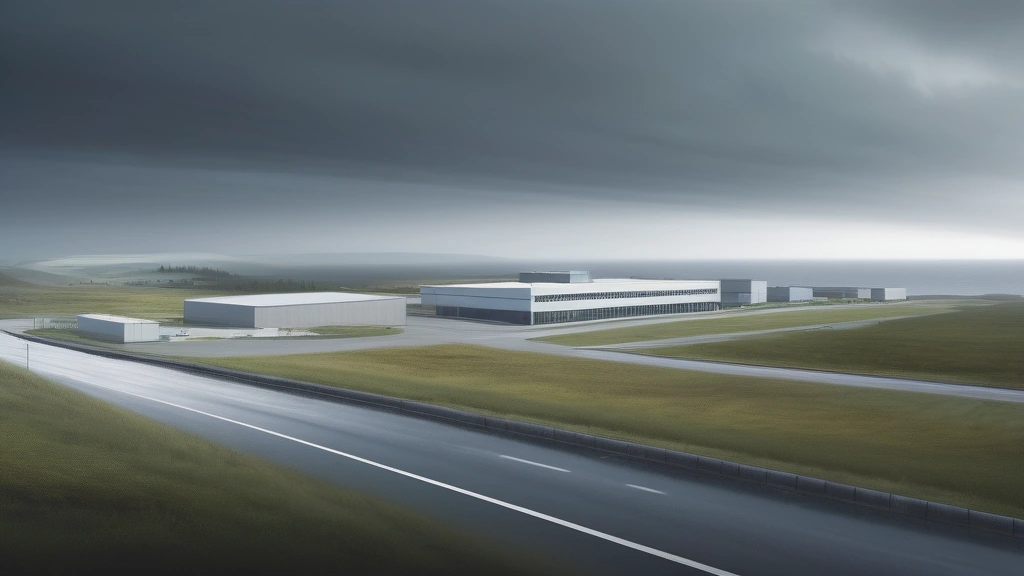
American company Anthropic will lease the facility to power its AI assistant named Claude. Canada currently ranks ninth among countries using Anthropic's Claude AI, while the United States is the largest user. This arrangement prompted questions from attendees about digital sovereignty and the implications of storing Canadian data for an American company.
EverWind has applied for industrial approval for 14 diesel generators totaling 42 megawatts to provide backup power. However, significant confusion remains because other sources and website information have cited a conflicting figure of 102 megawatts for the diesel requirement. This discrepancy is notable because 44 megawatts is the threshold that triggers a full environmental assessment. During grid outages, batteries are designed to provide backup power for about two hours before the diesel generators are activated. EverWind stated that the diesel generators are modeled to be used only three to five percent of the time in worst-case scenarios, though residents expressed concern over potential carbon emissions.
Disagreement also emerged over the timeline for associated renewable energy infrastructure. EverWind expects its first of four onshore wind farms to come online in 2028, with all fully operational by 2029. Phase 1 of the data centre, with a capacity of 95 megawatts, is expected to come online in late 2027. Once Phase 2 reaches its 325-megawatt capacity and the wind farms are active, they are expected to supply approximately two-thirds of the data centre's power. Community members questioned why the data centre is proceeding without the renewable infrastructure ready, while EverWind argued that wind farms take longer to develop.
Environmental safeguards were another focus of the sessions. Propylene glycol will be used in the water-glycol mixture for the data centre's closed-loop cooling system, which is never discharged into local waterways. Maintenance waste from the cooling system will be trucked to GFL Environmental’s facility in Debert for treatment. The Department of Environment and Climate Change noted that citizens can report spills via 1-800-565-1633 and that officers are located near Point Tupper. 
Regarding noise mitigation, EverWind claims there will be no audible noise in Port Hawkesbury from the data centre due to the site location and acoustical closures. Industrial approvals for the project are reviewed by the Large Industrial File Team (LIFT), which includes experienced inspectors and engineers.