Families in Russia's Kursk Region Struggle for Answers as Missing Person Counts Diverge
Following Ukraine's August 2024 incursion into the Kursk region, families of missing civilians face conflicting official data and administrative failures. While the local governor reports over 300 missing, resident-compiled lists suggest nearly 1,000 names, amid accusations of state media downplaying threats and authorities losing DNA samples.
In the aftermath of Ukrainian forces breaking into Russia’s Kursk region in August 2024, hundreds of Russian civilians remain unaccounted for, leaving families to navigate a landscape of conflicting information and bureaucratic neglect. The initial incursion saw Ukrainian troops overrun more than 777 sq km (300 sq miles) of territory within six days, trapping approximately 2,000 people in settlements captured by the military.
The scale of the human toll remains disputed. The local governor has stated that more than 300 Russians are still missing, though he acknowledged the true figure is unknown. In contrast, residents who formed groups to track missing persons have compiled unofficial lists containing about 1,000 names, derived from videos published by Ukrainian military sources and journalists. This discrepancy highlights the growing frustration among families who accuse Russian state media of downplaying the threat and preventing timely evacuations.
Communication blackouts exacerbated the crisis. Mobile and internet links in the affected area were down for most of the eight months following the initial incursion, severing ties between those trapped and their relatives. During this period, nearly 200 Russians sent a letter to President Volodymyr Zelensky, President Vladimir Putin, and the United Nations requesting a humanitarian corridor for civilian evacuation. According to family accounts, this corridor was never established.
Administrative failures have further complicated efforts to identify the dead. In early 2025, Russia's human rights commissioner published a list of 517 missing Kursk residents, which families criticized for mixing up the names of the missing with those searching for them. One woman, Lyubov, identified her mother’s body in a Kursk mortuary in October 2025 after providing a DNA sample in January that authorities claimed was lost. Such delays have left bodies of deceased civilians unidentified for months.
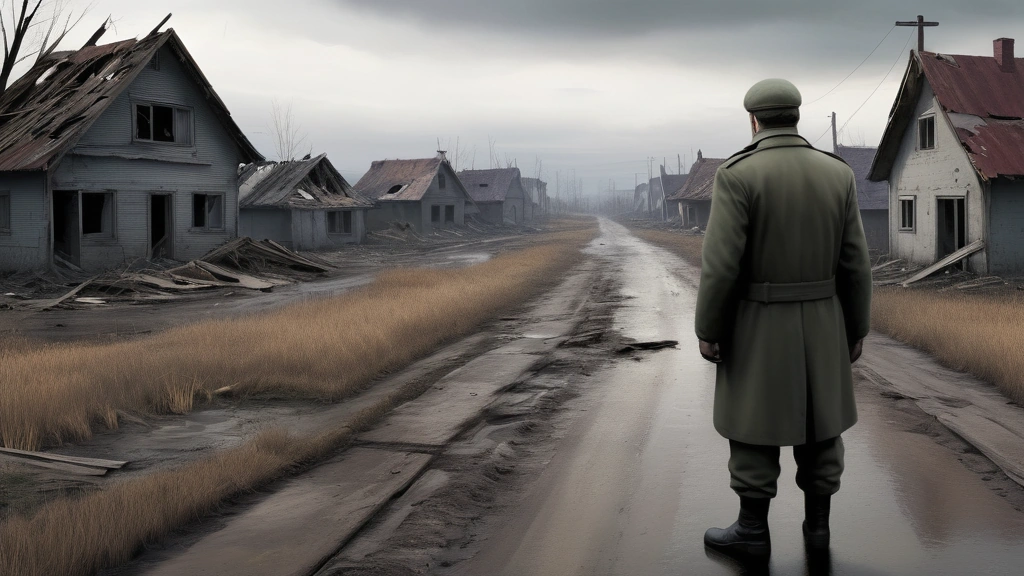
The physical destruction in conflict zones like Darino has been severe, with authorities reporting that 90% of the village was destroyed due to heavy fighting in late 2024. Retrieval operations for the dead have often fallen to volunteers rather than state agencies; in areas like Darino, volunteers paid for body bags and fuel themselves because authorities did not provide resources.
While Russia's foreign ministry has accused Ukraine of war crimes against civilians—allegations rejected by Kyiv as unfounded—Ukrainian authorities maintain a different narrative regarding the fate of those they encountered. Ukraine's Territorial Defence Forces and human rights commissioner stated that all civilians they evacuated from the Kursk region had been handed over to Russia. Despite these claims, families continue to report resentment toward the Russian state for failing to evacuate civilians or provide accurate information, while local communities in the conflict zone remain largely destroyed or abandoned.