Lithium Battery Fires Surge Across Canada, Challenging Firefighters and Prompting Safety Warnings
Recent lithium battery fires in Ontario and Prince Edward Island have highlighted the growing dangers of e-bikes and energy storage systems. With an estimated 1,500 such fires across Canada last year, experts are urging the public to use certified batteries and warning that traditional firefighting methods often fall short.
Recent lithium battery fires in homes in Toronto and Peterborough, Ont., as well as at a solar farm in Prince Edward Island last month, have drawn renewed attention to the unique hazards posed by these power sources. Lithium batteries are the official theme for this week's Fire Prevention Week as safety officials work to address the rising number of incidents.
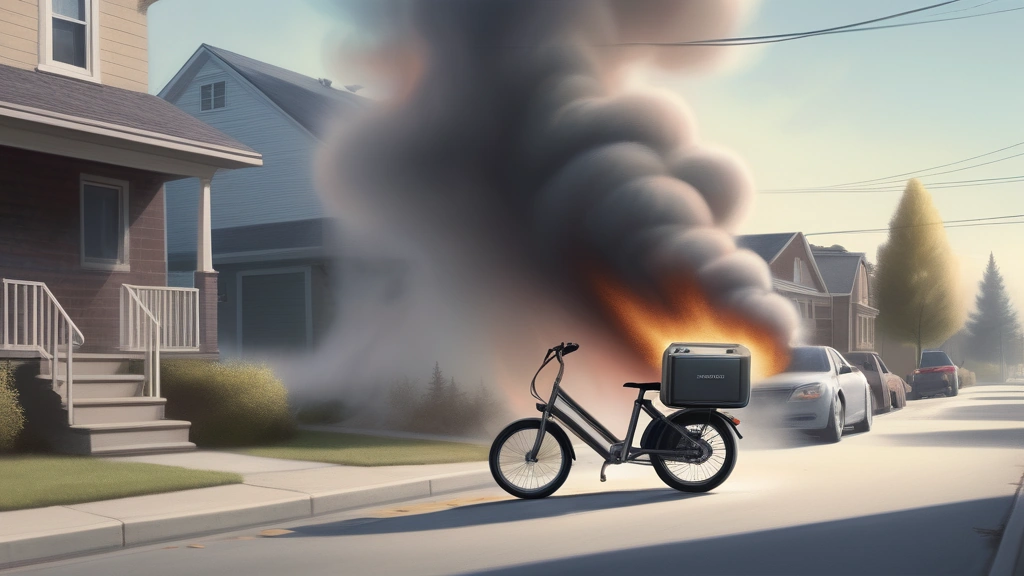
A survey by the Canadian Association of Fire Chiefs estimates there were 1,500 fires started by lithium batteries across 600 communities in Canada last year. Paul Boissoneault, president of the association and chief of the Oakville Fire Department, stated that lithium battery fires are growing exponentially alongside the increasing number of devices. These fires are most common in home devices like e-bikes and e-scooters. Fires involving electric vehicles and grid storage systems are rarer due to rigorous testing and built-in safety features; according to the Electric Power Research Institute database, the P.E.I. grid storage fire was one of only six such incidents worldwide this year.
Concerns over these fires have already led to bans on electric bikes and cars in some buildings, on public transit, and on ferries, contributing to hesitancy among people regarding trying electric vehicles.
Randy Narine, a firefighter in Brampton, Ont., explained that holes in the barrier material separating battery terminals cause short circuits leading to fires. Other causes include wear and tear, physical damage from collisions or drops, overheating from improper charging, and exposure to external heat sources. Once ignited, lithium batteries can enter "thermal runaway," where heat triggers chemical reactions that generate more heat, potentially causing explosive chain reactions.
Fighting these blazes presents severe challenges. Lithium batteries generate their own oxygen during fires because metal oxide terminals break down into metal and oxygen gas, making traditional smothering techniques ineffective. The fires also produce toxic substances like hydrogen fluoride and can contaminate firefighters' gear with formaldehyde and heavy metals. Furthermore, burned batteries pose challenges in transporting and storing due to reignition risks, as they can flare up again hours, days, or weeks later.
Only 40 per cent of surveyed fire departments had formal training on dealing with lithium battery incidents, and fewer had standard operating policies or the correct equipment. Extinguishing an EV lithium battery fire can require tens of thousands of litres of water, compared to less than 2,000 litres for a gas car fire. However, Adam Jakubowski, a senior consultant with Energy Safety Response Group, noted that putting water on large lithium battery fires may prolong them and lead to environmental contamination via runoff.
To mitigate risks, experts recommend buying batteries with certification labels such as CSA, cUL, or CETL and avoiding modifications intended to increase charge capacity or speed. Jon McQuaid of Call2Recycle Canada advises taping over battery terminals before recycling to prevent sparks and thermal runaway.