Toyota Reaffirms Canadian Manufacturing Commitment Amid Industry Pullback
Toyota Motor Corp. is expanding its manufacturing footprint in Ontario with a new hybrid Lexus NX and a US$1.1 billion RAV4 investment, contrasting with downsizing efforts by U.S. rivals and Honda amid rising Chinese competition and tariff threats.
Toyota Motor Corp. is deepening its manufacturing presence in Canada even as other major automakers scale back operations in the country. The Japanese automaker will begin producing an updated, hybrid-only version of the Lexus NX at its Cambridge, Ontario plant starting in December. 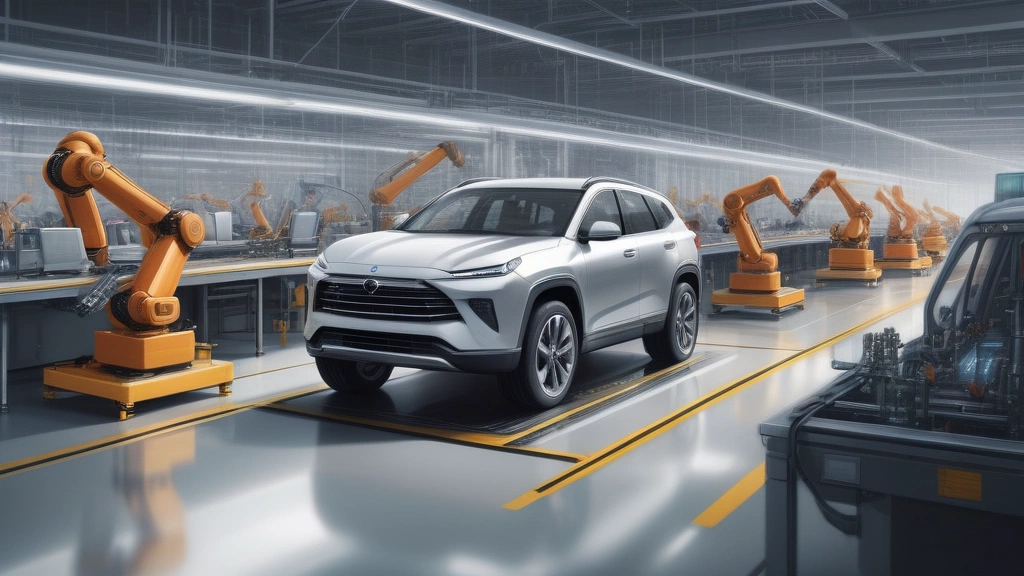
The move follows a US$1.1 billion investment in Toyota's Canadian operations to support the latest RAV4 model, which entered production in January. Approximately 85 per cent of the vehicles produced at the Cambridge complex are earmarked for export, mostly to the United States.
Toyota's two Ontario facilities produced a combined 537,518 vehicles last year, making it the largest vehicle manufacturer in Canada. The company also achieved record deliveries of 249,445 vehicles in the Canadian market last year, representing a 4.4 per cent gain.
Toyota's expansion contrasts sharply with recent moves by its competitors. General Motors Co., Ford Motor Co., and Stellantis NV have all scaled back their production footprints in Canada. While General Motors remains the market leader in Canada with 2025 sales of about 300,000 cars and trucks, U.S. tariffs have eroded profitability and spurred some carmakers to downsize their Canadian operations. Honda Motor Co. scrapped plans earlier this year to build a $15 billion EV battery supply chain near its existing Ontario plant. 
The broader Canadian auto sector has experienced a long-term decline due to labour and fixed costs. Vehicle production in the country fell from around 3 million units in 2000 to 1.3 million in 2024.
Trade tensions add further uncertainty to the industry. The White House has threatened to increase tariffs on autos to 50 per cent if a broader trade deal is not reached by Jan. 1.
Competition in the Canadian market is also intensifying with the expected entry of Chinese-made cars. China’s Geely Automobile Holdings Ltd. plans to launch sales in Canada next year, becoming the first Chinese mass-market electric vehicle maker to establish a presence there.